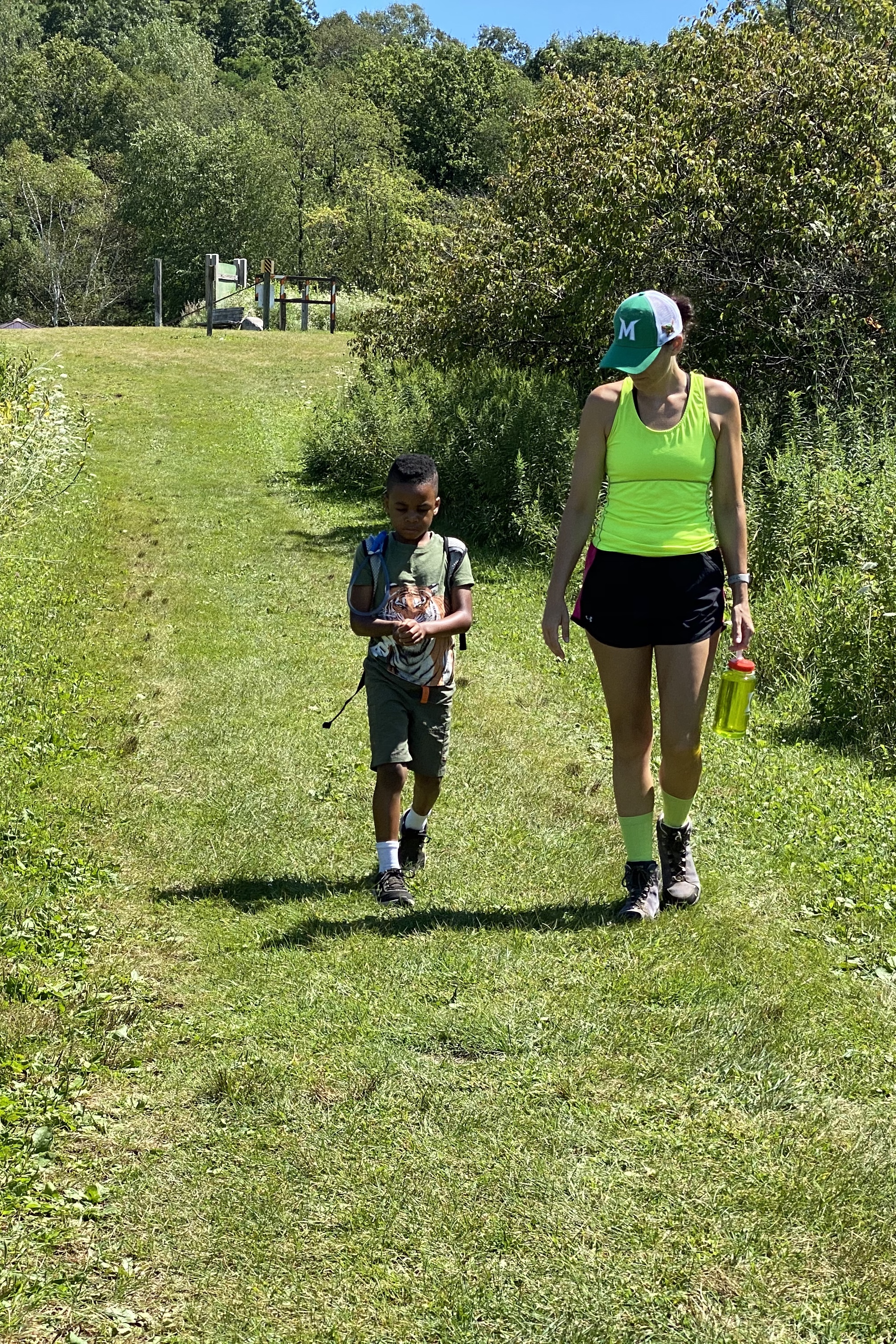
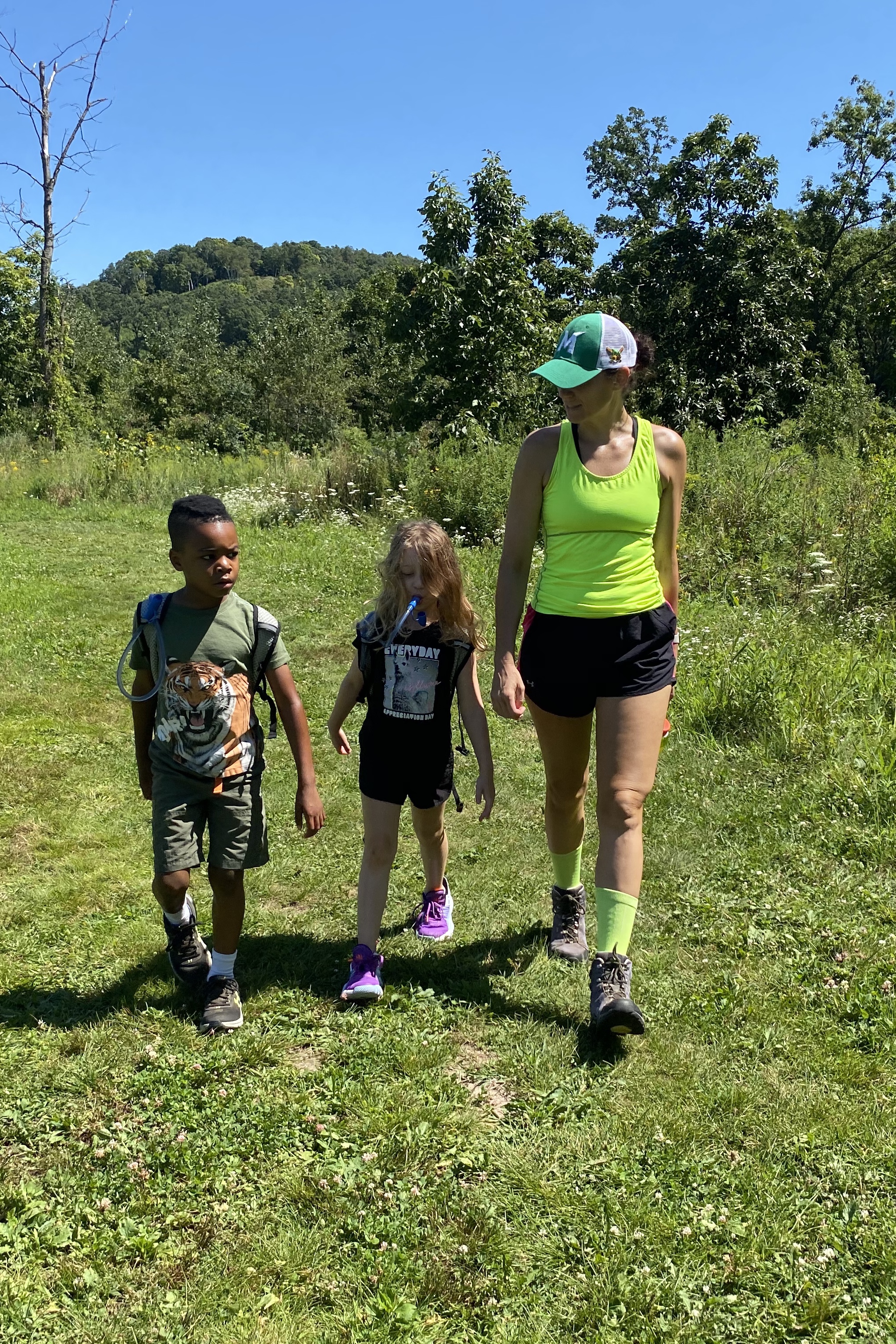
August 12, 2020. Today, we had a conversation at home that carried us through our hike. Right before the hike, we’d gotten into a friendly argument over the color of my shirt. Nick has long called the shirt safety green. I’ve long seen the shirt as highlighter (or neon) yellow. Likewise, the water bottle I carried was an undeniable yellow to me, whereas, it is safety green to Nick. The truth is, both were likely labeled “safety green” on the distributors’ websites, yet, to me, they look yellow.
This long-standing debate between safety green and highlighter yellow expands to almost any brightly colored greenish-yellow we see (whether in clothing, signs, bumper stickers, etc.). Today, the argument shifted away from who’s right and into why we see the color the way we do.
While in college, Nick worked in construction. Safety green and safety orange were all around him. So, he sees it as safety green. As I enter my sixth year of graduate school, I own so many highlighters we should have invested in Sharpie. Any bright color I see reminds me of a highlighter.
In short, the ways we categorize the color are influenced by our experiences in life. While there might be a “right” answer to the color of my shirt, establishing that seems far less important than seeking to understand and engaging dialogue about why we see it differently.
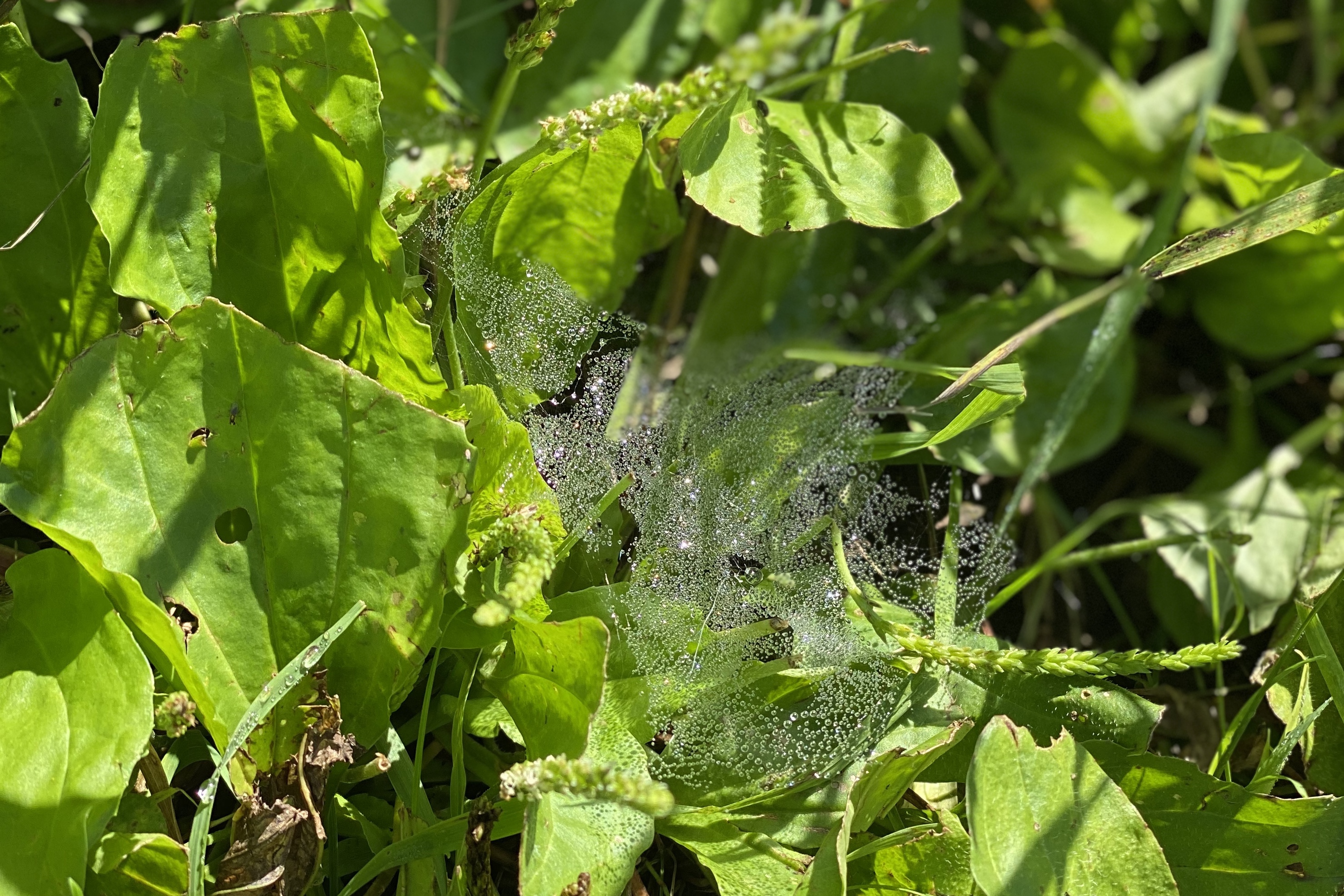
While we were on the trail today, we took time to try and experience the world at each other’s levels. Literally, Nick and I squatted down in attempts to see the world from the eye gaze height of Elijah and Penelope. I was amazed at the things they saw. They notice things I look right over or beyond, because we see the world from a different vantage point (literally).
It is so important to take the time to understand our own positionality—the ways our experiences and identity influence (and potentially bias) our outlook on the world. I’m not merely talking about Nick’s experience as a construction worker or mine in graduate school. We need to think about how our race, gender identity, sexual orientation, financial position, religion, education, etc. all influence the ways we interface with the world. If we are not intentional about seeking to understand the perspectives of others, our positionality can easily bias our views.
One last example. When I was growing up and thought about getting pulled over by a police officer (which eventually happened when I was speeding in high school), my biggest worry was that my parents would be disappointed in me. My son, Elijah, stays up late into the night terrified these days that if he gets pulled over some day, he’ll be killed by the officers. That is his truth as a young black boy. It is real. And valid. Positionality and privilege. Being anti-racist is a daily practice and in it, we must recognize our positionality and own our privileges—even when it’s uncomfortable to do so.




 KNEP Hikes
Definitely highlighter yellow. 🙂
Just kidding. Thanks for the thoughtful post and the reminder of how much personality and privilege impact how we see the world. Love you guys!
LikeLike